
Paying for Things in the UK
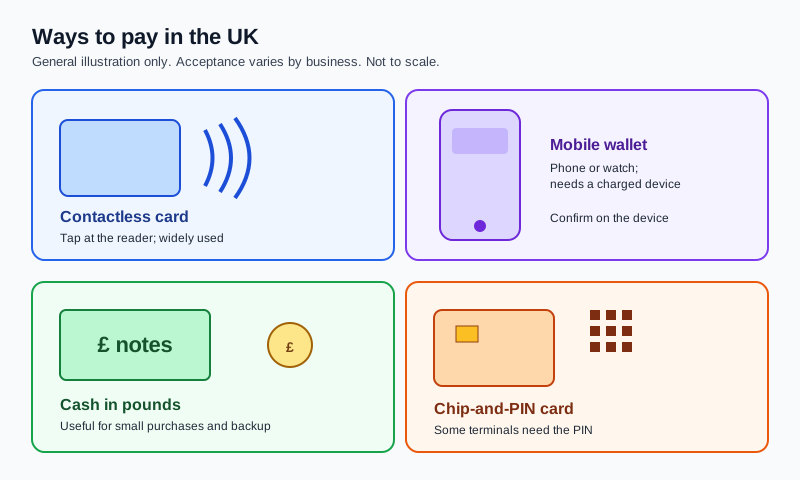
Most visitors pay by card in the UK. Contactless payment is widely used in shops, cafés, restaurants and on public transport, and many visitors can also pay with a phone or watch. Cash is still accepted in many places, although some businesses no longer take it. The key questions are which payment method to use, how to avoid unexpected charges on a card, and when a tip is expected.
This guide explains how payments and tipping work in general terms. Card providers set their own fees and limits, and businesses set their own policies, so check your card issuer’s terms and the business’s own information before you pay.
Pound Sterling and Currency Basics
The UK currency is the pound sterling, shown as £. The Bank of England says four denominations of banknotes are in circulation: £5, £10, £20 and £50. All four are printed on polymer. Coins include pound coins and smaller coins for pence.
Six banks in Scotland and Northern Ireland issue their own banknotes. Shops may not always accept these notes, so carry Bank of England notes or coins as a backup in case a shop does not accept them.
Where Card Payments Are Commonly Used
Card payments are common in shops, supermarkets, restaurants, hotels, attractions and most transport. Smaller businesses, market stalls and some rural businesses may prefer cash. Check the sign or ask before you order.
Contactless Card Payments
Contactless payment means holding a card or device near the reader rather than inserting it. It is quick and widely accepted. Visit London says a contactless card or device can be used on the Tube, DLR, London Overground and most National Rail services in London, and that buses and trams need only one touch when you board.
The per-payment limit for contactless cards is no longer fixed by regulation. According to Which?, from 19 March 2026 banks were free to set their own individual limits. The article is not stating a single limit: most banks had kept £100 per payment when Which? checked, some let customers set a lower personal limit in their banking app, and limits can change. Check your bank’s current limit before you travel.
Apple Pay, Google Pay and Other Mobile Wallets
Mobile wallets let you pay with a phone or watch that holds a card. Which? notes that mobile wallets such as Apple Pay, Google Wallet and Samsung Pay do not have a mandatory limit on individual payments in the same way as physical cards. Payments are usually confirmed on the device, with a passcode, fingerprint or face scan.
A wallet needs a working phone or watch, a charged battery and, for some services, data or a network connection. Check that the card you want to use is supported in your wallet and that the wallet works in the UK before you rely on it.
When Carrying Cash May Be Useful
Cash is useful for small purchases at markets, some cafés and small independent shops, for tips where you want to leave one in cash, and as a backup if a card terminal is not working. Keep a small amount of cash rather than large sums. Keep cash separate from your cards, and keep it secure.
ATMs and Cash Withdrawals
ATMs are common in London and in towns across the UK. Withdrawing cash abroad can involve two sets of charges: a fee from the ATM operator and a charge from your card issuer. Fees and rules vary by bank and by ATM, so check both before you withdraw. Use ATMs attached to banks where possible, cover your PIN when you enter it, and decline any offer of a service you did not ask for at the machine.
Dynamic Currency Conversion
Dynamic currency conversion, often shortened to DCC, is when a terminal or ATM offers to charge your card in your home currency rather than in pounds. The merchant or ATM operator sets the exchange rate for that transaction, and that rate can be less favourable than the rate your card network or issuer would use.
If a terminal offers a choice, you can usually decline the conversion and pay in pounds. Card scheme rules, as described in industry guidance, require the cardholder to be offered that choice and told the cost. If you did not agree to the conversion, contact your card issuer. Check your card issuer’s terms for how it treats DCC.
Foreign Transaction Fees
Some cards charge a foreign transaction fee on purchases made in a currency other than the card’s own currency, or from a merchant based abroad. Other cards do not. Whether a fee applies, and how much it is, depends on your card issuer’s terms. Check these before you travel, and check whether your bank charges for ATM withdrawals in another currency.
Debit Versus Credit Cards Abroad
Debit cards draw directly on your bank account. Credit cards draw on a credit account and can offer extra protections for some purchases, depending on the card and the terms. Neither type is always better. Taking both gives you a backup if one card is blocked, lost or refused. This guide does not recommend a specific product or card.
Paying for London Public Transport
London transport can be paid for with contactless cards and devices, or with an Oyster card. The rules for tapping in and out, fare zones, peak times and daily caps are set out in our public transport guide. The main point for payments is to use the same card or device for every tap, and to tap out where it applies.
Paying at Restaurants and Cafés
Many restaurants bring a card terminal to the table, and some ask you to pay at the counter. Check whether the bill includes a service charge before you add a tip. Some cafés have a tip option on the card terminal. Keep the receipt until you have checked the total.
UK Tipping Customs
Tipping in the UK is voluntary. Visit London says tipping is not mandatory, and that it is discretionary and based on the level of service you receive. Customs vary by situation, so the guide below is a general pattern rather than a rule.
| Situation | Common practice | Typical amount in guides | Notes |
|---|---|---|---|
| Restaurant with no service charge on the bill | A tip is customary if you were served well | 10 to 15% of the bill | Check the bill first |
| Restaurant with a service charge | No extra tip is usually needed | Service charge is often around 12.5% | Ask to remove it if you are unhappy with the service |
| Pubs and bars when ordering at the bar | Tipping is not usually expected | Optional | Some bars have a tip tray for change |
| Cafés and coffee shops | Optional; round up or leave small change | Small change | Some card terminals offer a tip option |
| Taxis and minicabs | Round up the fare or add a small amount | Round up, or a small percentage | Ride-hailing apps often let you add a tip after the trip |
| Hotel porters, housekeeping and concierge | Optional but appreciated | Varies by service | Leave housekeeping cash at the end of your stay |
Service Charges and Optional Tips
A service charge is an amount added to the bill by the business, and it is different from a tip you choose to leave. Visit London describes a service charge as a form of gratuity, and says you can ask for it to be removed if you are unhappy with the service. Check the bill for a service charge before you decide whether to leave an extra tip, so you do not pay twice without meaning to.
The Employment (Allocation of Tips) Act 2023 has applied since 1 October 2024. It requires employers to pass on tips to staff, and its code of practice covers service charges too. Check legislation.gov.uk for the Act’s geographical extent. This is a rule for employers, not a requirement on customers, who still decide whether to leave a tip.
Hotels, Taxis and Other Services
Hotels, taxis and services often accept cards. For a taxi, you can round up the fare or add a small tip, and ride-hailing apps usually let you tip after the journey. In hotels, porters and housekeeping staff may be tipped if they provided good service. Tour guides on free or walking tours often rely on tips, so check the guide’s own guidance.
Check the policy first
Businesses should make their tipping policy clear. If you pay by card and want the tip to reach the person who served you, ask the staff member how tips are handled.
Paying in Smaller Towns and Rural Areas
Smaller towns, villages and rural areas may have fewer card terminals, limited ATMs and patchy mobile signal. A card terminal may need a phone connection to process a payment. Carry some cash for small purchases, pubs, farm shops and local transport in these areas, and check opening hours before you travel.
Protecting Cards and Payment Details
Keep cards and devices in a secure place, and report a lost or stolen card to your bank as soon as possible. Do not share your PIN. Use mobile wallets only on a phone or watch with a passcode or biometric lock. Check your statements and set up alerts if your bank offers them. Which? notes that victims of unauthorised card fraud are almost always refunded in full, but reporting quickly still matters.
What to Do if a Card Is Declined
A declined payment can have several causes: a limit, a blocked card, a network problem, a terminal fault or a fraud check. Try a second card or payment method, and ask whether the terminal can try again. If a payment is declined repeatedly, contact your bank through its app or its international number, which is often printed on the back of your card. Do not keep retrying a card that has been declined several times.
Travelling With More Than One Payment Method
A sensible setup is one contactless card, one backup card, and a small amount of cash. Keep the backup card in a separate place from the main card. If you use a phone wallet, keep the physical card as a backup in case the phone is lost or runs out of battery.
| Payment method | Advantages | Potential limitations | Travel tips |
|---|---|---|---|
| Contactless card | Quick; widely accepted; works on most London transport | Per-payment limits are set by each bank; some terminals may not accept contactless | Check your bank limit; carry a backup card |
| Mobile wallet (phone or watch) | No need to carry the physical card; device confirmation | Needs a charged device; may need data or a connection; support depends on card and device | Keep a physical card as backup; check the wallet works in the UK |
| Cash in pounds | Works where cards are not accepted; useful for small purchases and tips | Carrying large sums is risky; some Scottish and Northern Irish notes may not be accepted everywhere | Carry a small amount; keep Bank of England notes or coins as a backup |
| Chip-and-PIN card (no contactless) | Accepted at most terminals that take cards | Needs your PIN; slower; ATM and foreign transaction fees depend on your card issuer | Decline dynamic currency conversion; check your card terms before you travel |
Frequently Asked Questions
Is the UK cash-free?
No. Card and contactless payments are very common, but many places still accept cash. Carry some cash for smaller purchases and as a backup.
Do I have to tip in London?
No. Tipping is voluntary. Check whether a service charge is already on the bill before you decide whether to add a tip.
Can I use Apple Pay or Google Pay on London transport?
Visit London says contactless cards or devices can be used on the Tube, DLR, London Overground and most National Rail services within London. Check your wallet provider and the operator’s rules before relying on a wallet for travel.
Arrival-Day Money Checklist
- Check your card’s foreign transaction fee, ATM and currency terms with your card issuer.
- Check the contactless limit with your bank, and confirm your card works for contactless.
- Carry a backup card and a small amount of pound cash.
- Decline dynamic currency conversion and pay in pounds where you are offered the choice.
- Check whether a bill includes a service charge before you add a tip.
- Save your bank’s international contact number somewhere you can reach it without your phone.
For entry requirements, check the UK ETA requirements guide before you travel. Entry requirements do not depend on how you pay.