
Quick answer
Crew members can be exempt from needing permission to enter the UK when they arrive and leave in their working role. If that exemption applies, you do not need an ETA. The exemption has conditions, including that you are engaged to leave the UK as crew. Crew who come to the UK for a permitted visitor activity do need an ETA.
Who counts as crew
The official guidance says crew means anyone actually employed in the working or service of a ship, a through-train, a shuttle train or an aircraft. That includes the captain of a ship or aircraft. Being on board as a passenger is not the same as being crew.
The crew exemption from permission to enter
You do not need permission to enter the UK if both of the following apply:
- you arrive as a crew member of a ship, a through-train or shuttle train, or an aircraft; and
- you are engaged to leave the UK as a member of crew on that ship, aircraft or train.
Aircrew and train crew may leave on another aircraft or shuttle train, but they must be scheduled to leave within seven days. If you are exempt from needing permission to enter, you do not need an ETA.
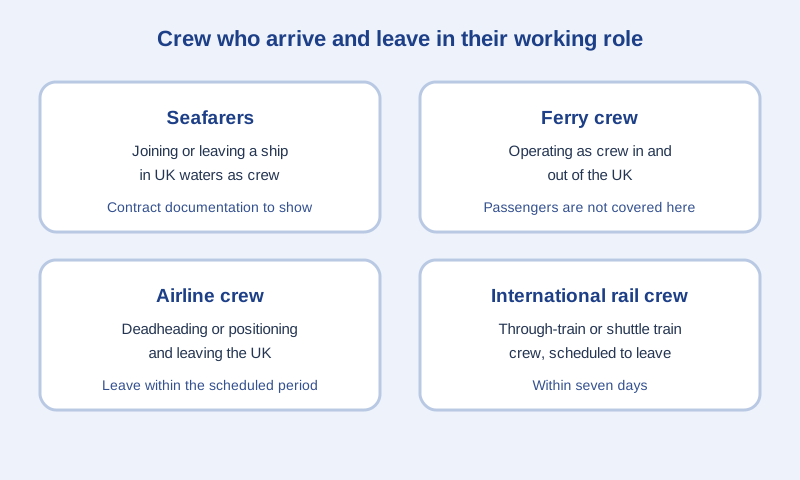
When the crew exemption does not apply
The official guidance says the crew exemption does not apply if you:
- are the subject of a deportation order;
- have previously been refused permission to enter the UK and have not since been given permission;
- have been required to submit to examination under the Immigration Act 1971; or
- are an offshore worker.
Seafarers
The official guidance says you do not need an ETA if you are working as a seafarer arriving and leaving as crew, as an ILO book holder arriving as crew to join a ship that is leaving UK waters, or as a seafarer repatriating.
Seafarers who arrive by air or sea to join a ship in the UK should have documentation showing that they are under contract to join the ship as a member of its crew. The guidance says this should normally be a contract of employment.
Ferry crew
You do not need an ETA if you are a ferry crew member arriving on a ship and operating as crew in and out of the UK, or arriving to join a ferry that is leaving UK waters. This describes crew, not passengers. Ferry passenger arrivals are covered in our separate guide.
Airline crew
You do not need an ETA if you are working as aircrew deadheading or positioning, and you are leaving the UK. The guidance uses both terms, so check which one describes your duty.
International rail crew
You do not need an ETA if you are working as crew of a through-train or shuttle train who do not leave any control area to embark or disembark passengers, or as crew of a through-train or shuttle train scheduled to leave the UK within seven days.
When crew need an ETA
The official guidance says that seafarers, ferry crew, airline crew and international rail crew who come to the UK to undertake a permitted activity within the visitor route do need an ETA. Their crew role does not remove that requirement.
| Crew group | No ETA when | ETA needed when |
|---|---|---|
| Seafarers | Arriving and leaving as crew, joining a ship leaving UK waters, or repatriating | Coming to the UK for a permitted visitor activity |
| Ferry crew | Operating as crew in and out of the UK, or joining a ferry leaving UK waters | Coming to the UK for a permitted visitor activity |
| Airline crew | Deadheading or positioning and leaving the UK | Coming to the UK for a permitted visitor activity |
| International rail crew | Crew on a through-train or shuttle train that does not leave a control area to embark or disembark passengers, or scheduled to leave within seven days | Coming to the UK for a permitted visitor activity |
Film and entertainment crews are a separate matter under the visitor rules. They are covered in our guide to volunteering, journalism and sport visits.
Common misunderstandings
“Any crew member does not need an ETA”
No. The exemption depends on the working role, the conditions of the arrival and departure, and the exceptions. It does not apply to everyone who works on a ship or aircraft.
“Crew do not need an ETA for any trip”
No. Crew who come to the UK for a permitted visitor activity do need an ETA.
“Seafarers can join a ship without any documents”
The official guidance says seafarers arriving to join a ship should have documentation showing the contract to join the crew, normally a contract of employment.
Frequently asked questions
Does a seafarer who joins a ship in the UK need an ETA?
The official guidance says seafarers arriving by air or sea to join a ship that is leaving UK waters do not need an ETA, provided they have documentation showing the contract to join the crew. Carry that documentation.
Do aircrew need an ETA if they come to the UK for a visitor activity?
Yes. The guidance says aircrew who come to the UK to undertake a permitted visitor activity need an ETA, even though the crew exemption covers their working arrival and departure.
Is ferry crew the same as ferry passengers?
No. The exemption for ferry crew applies to people working as crew. Passengers follow the rules for their nationality and purpose.
Next steps
If you travel as crew, check the crew group that applies, the conditions of your arrival and departure, and the exceptions. If you come to the UK for a permitted visitor activity and need an ETA, you can start your application now.