
Quick answer
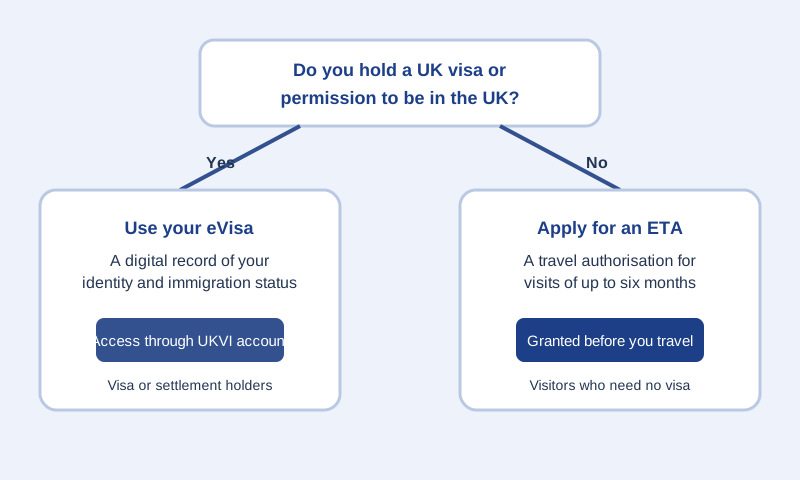
An eVisa and an ETA are different things. An eVisa is a digital record of your immigration status when you hold a UK visa or another permission to be in the UK. An ETA (electronic travel authorisation) is a permission to travel for certain visitors who do not need a visa. Work out which situation you are in before you book.
Two different things
The official guidance describes an eVisa as a record of your identity and immigration status. It shows the type of visa you hold, or whether you have settlement in the UK, and the conditions attached to your status, such as whether you may work or study. It replaces the physical documents that used to show this.
An ETA is a different kind of document. It allows people who do not need a visa to travel to the UK for up to six months. You apply for it before you travel, and it is linked to the passport named in your application.
| eVisa | UK ETA | |
|---|---|---|
| What it is | A digital record of your identity and immigration status | An electronic travel authorisation linked to one passport |
| Who it usually applies to | People with a UK visa or another permission to be in the UK, including settlement | People who do not need a visa and are eligible to travel without one |
| What you do | Access it through a UKVI account and add the passport you travel on | Apply before you travel and wait for a decision |
| Before you travel | Check your UKVI account and eVisa details match your passport and carrier information | Check the ETA and its expiry date, using the passport you applied with |
Which one applies to your trip
The question is not which document you prefer. It is which status you already have. Two groups cover most cases:
- you hold a UK visa, or another permission to live, work or study in the UK, including settled or pre-settled status; or
- you do not need a visa for a short visit and you are eligible to travel without one.
The official ETA guidance says you do not need an ETA if you have a UK visa or permission to live, work or study in the UK. The official guidance also says you do not need an eVisa if you are visiting the UK with an ETA.
If you hold a UK visa or settlement
An eVisa is the record of your status, so you use it rather than an ETA. The official guidance says you will have an eVisa if you have successfully applied for a visa or another type of permission to be in the UK. Settlement is also covered, including where it was previously shown by a sticker or stamp in an old passport.
If your physical document is a visa vignette (sticker) or another paper proof of status, it stays valid until its own expiry date. The official guidance also says that getting an eVisa does not change your immigration status.
If you need an ETA
If you do not hold a visa and you are eligible for an ETA, you need the ETA for your trip. You do not need an eVisa for that journey. The ETA is linked to the passport you named in the application, and it allows travel only on that passport. Our guide to ETA requirements explains who is eligible.
Setting up your UKVI account
To access an eVisa you need a UK Visas and Immigration (UKVI) account. The official guidance says there is no charge to set one up or to access your eVisa. You can create the account with a phone number and email address that you can use each time you sign in, along with a valid passport and your visa application number or unique application number.
If you already have a UKVI account, do not create another one. The official guidance says it is usually possible to access your eVisa straight away once it is linked, although it can take up to 24 hours.
Sharing your status
You can get a share code to prove your immigration status to employers, landlords or carriers. The official guidance says a share code for travel is valid for 90 days, so you can obtain it before you leave.
Matching your passport and details
The UKVI account must hold the passport you will actually travel on. The official guidance says you must travel with a valid passport or travel document that you have added to your UKVI account, and you can add more than one.
Your details also need to match the passenger information you give your carrier, such as an airline. The official guidance says a carrier may not let you travel if your details are wrong, and you may be delayed at the border.
Changes to your account depend on what has changed. The official guidance says that if you have a biometric passport, you can update your account yourself when your passport details, name or nationality change. If other personal details have changed, you may need to ask UKVI to update the account for you.
Checks before you travel
- Identify which situation applies: a visa or settlement, or visiting without a visa.
- If you hold a visa or settlement, sign in to your UKVI account and confirm the eVisa is correct.
- Confirm that your account holds the passport you will travel on, and that the details match your carrier information.
- If you need an ETA, check that it is granted, linked to the passport you will use, and valid on your travel date.
- If something is wrong with an eVisa, report the error through the official service before you travel.
Common misunderstandings
“I have a visa, so I need an ETA as well”
The official guidance says you do not need an ETA if you have a UK visa. Your eVisa is the record to check.
“An eVisa is the same as an ETA”
It is not. An eVisa records status you already hold. An ETA is a travel authorisation that you apply for.
“My passport details do not need to match”
They do. The guidance says your UKVI account details, your eVisa and the information given to your carrier should all match.
Frequently asked questions
Do I need an eVisa if I am visiting for a few weeks?
Only if you hold a UK visa or another permission to be in the UK. If you do not, and you are eligible for an ETA, the ETA is the route rather than an eVisa.
Is an eVisa a paper document?
No. The official guidance says eVisas have replaced physical immigration documents. Some paper proof, such as a vignette, remains valid until its expiry date.
What if I cannot see my eVisa?
The official guidance says you can report an error with your eVisa if you cannot view it when you sign in, and you can use UKVI’s webchat for other questions about your account.
Next steps
Start by working out whether you hold a visa or settlement, or whether you are travelling without one. If you need an ETA, you can start your application now.