
Is Three Days Enough for London?
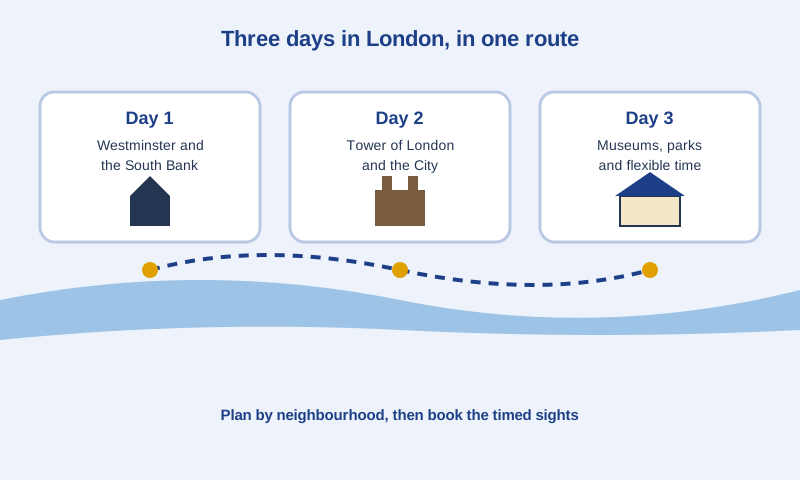
Three days is enough to see the central highlights of London for the first time, but not enough to see everything. London has far more to do than any short trip can cover, so the useful question is which parts of the city matter most to you. Many first-time visitors want the royal and governmental landmarks, a river walk, a historic site, and at least one museum. The plan below gives each day a clear area, so you spend less time crossing the city and more time at the sights.
The three days are built around a realistic geographical order rather than a fixed schedule. Treat them as a framework. Swap a day around if your flights, a booked show or the weather point you in a different direction.
Planning Your Route by Neighbourhood
Plan each day around one or two neighbourhoods. This keeps walking distances short and reduces the number of Underground changes. Central London is a compact area, so two or three sights in one district are usually more practical than a cross-city dash. The table below gives a day-by-day plan that you can adapt.
| Day | Main area | Suggested focus | Booking note |
|---|---|---|---|
| Day 1 | Westminster and the South Bank | Parliament area, Westminster Abbey, Whitehall, Trafalgar Square, then a river walk along the South Bank | Westminster Abbey charges for self-guided visits. Check its booking options first. |
| Day 2 | The Tower, Tower Bridge and the City | Tower of London, Tower Bridge, a walk through the City, and nearby markets | The Tower of London needs a ticket. Book in advance for a set time. |
| Day 3 | Museums, parks and shopping | British Museum, National Gallery or V&A, then a park or a shopping street | Permanent collections are generally free. Special exhibitions need tickets. |
Day 1: Westminster and the South Bank
Start in the Westminster area, where the Houses of Parliament, Westminster Abbey and Whitehall are close together. Whitehall leads to Trafalgar Square, a useful landmark for orientation and a short walk from many central stations.
In the afternoon, cross to the South Bank and walk east along the river. The South Bank has cultural venues, food stalls and open views of the river. It is a flexible stretch: you can stop at a museum, a gallery or a café, and head back into town at any point. This is a good first-day plan because it covers the classic landmarks without any long journeys.
Check Westminster Abbey before you go
Westminster Abbey charges admission for self-guided visits. Its pages describe different booking channels, so check the official site for the current booking options before you set out.
Day 2: The Tower, Tower Bridge and the City
Day two suits visitors who like history. The Tower of London is the main site. Plan to arrive within your booked time slot. Entry is by ticket, and you can book online in advance or buy on the day at the ticket office. Some experiences at the Tower, including the Ceremony of the Keys, need separate tickets, so check the Tower’s own listings before you plan the morning.
Tower Bridge is a short walk from the Tower. Whether the bridge’s exhibition is included in any entry is not confirmed here, so check the Tower Bridge site before you assume access. After the bridge, walk into the City of London, which has historic churches, modern buildings and a number of markets. Plan this area as a walking day, with one or two stops rather than a long list of sights.
Day 3: Museums, Parks and Flexible Time
Use the third day for museums and parks. The British Museum, the National Gallery and the V&A are all in or near central London, and each has a permanent collection with free general admission. Special exhibitions and some events are usually charged, so check the current listing for any show you want to see.
Keep the afternoon flexible. A park walk, a shopping street or a second museum visit can fill the time. If your trip falls on a weekday, you can add a West End show in the evening, and you should book that in advance.
Free Versus Ticketed Activities
Many of London’s best-known museums offer free general admission to their permanent collections, which makes them excellent value for a short trip. This general rule does not cover special exhibitions, which can carry a charge, and it does not cover every museum or attraction. Confirm the current admission policy on each museum’s own website.
| Activity | Admission policy | Check before you go |
|---|---|---|
| British Museum | Permanent collection is free; special exhibitions are charged | Whether to reserve a free general entry ticket; the exhibitions listing |
| National Gallery | General admission is free; some temporary exhibitions and events may be charged | The current exhibition programme |
| V&A (South Kensington) | General admission is free; some exhibitions and events are charged | The exhibition programme and any timed entry |
| Tower of London | Ticketed entry, booked online or bought on the day | Your chosen time slot and any separate experiences |
| Westminster Abbey | Admission is charged for self-guided visits | The current booking channels on the official site |
Prices change, so this guide does not quote them. Check the official site for the figure that applies to your date.
Getting Around London
The Underground is the fastest way to reach most sights in this plan. Central London sits within Zone 1, so many of the journeys in this plan are short and simple. Contactless cards and mobile wallets are accepted on Transport for London services, including the Underground and buses, so you may not need a paper ticket for those journeys.
Walking is often the best option for short distances between sights in the same area. Check the Transport for London journey planner on the day you travel, because engineering works and service changes are common.
Where to Stay for a Short Visit
For a three-day trip, choose accommodation in central London or close to a major Underground line. Staying near one of the main central stations keeps each day’s area within reach without a long commute. Check the transport options from your accommodation to each day’s area before you book, and read the cancellation terms if your plans may change.
Family and Rainy-Day Alternatives
Rainy weather is common in London, so keep one or two indoor options ready for each day. The museums in this plan work well in bad weather, and a covered market or a theatre matinee can also fill a wet afternoon. Families may prefer shorter days with a break in the middle, and a park or play area near the museums can help if children need time to run around.
For family days, book the timed attractions first, then add flexible time around them. Check each attraction’s own guidance on age requirements and accessibility before you go.
Common Planning Mistakes
Trying to see everything
Three days allows roughly two or three major sights per day, plus time for food and walking. Packing in more usually leaves you tired and rushed.
Ignoring timed entry
Timed-entry attractions, such as the Tower of London, run to set time slots. Booking ahead secures your slot, and arriving well outside it can cause problems.
Assuming everything is free
Free general admission does not include special exhibitions, tours and some events. Check each activity separately.
Crossing the city without a plan
Long journeys between opposite sides of the city eat into the day. Use the neighbourhood plan above to keep each day local.
UK Entry Requirements
Whether you need an ETA depends on your nationality and circumstances, not on which attractions you visit. Visitors who are eligible for an ETA and travel for tourism, including a short city break, can use one for a trip like this. Travellers who are not eligible may need a visa instead. Our UK ETA requirements guide explains who needs an ETA, and the tourism guidance covers holiday visits.
If you are eligible and need an ETA, you can start your application here: Start your UK ETA application.
Frequently Asked Questions
Is three days enough for a first visit to London?
Three days covers the central highlights when you plan by area. It will not cover everything, so choose the sights that matter most to you.
Are the British Museum and the National Gallery free?
Both offer free general admission to their permanent collections. Special exhibitions and some events are usually charged, so check each museum’s current listings.
Do I need to book the Tower of London?
The Tower of London requires a ticket. You can book online in advance or buy on the day at the ticket office, and it is sensible to book a time slot in advance.
Is Tower Bridge included with the Tower of London?
This guide does not confirm that. Check the Tower Bridge site for what its entry covers before you plan the day.
Do I need an ETA for a three-day London visit?
That depends on your nationality and circumstances, not on the number of days or the attractions you visit. Check the requirements guide before you book travel.
Practical Three-Day Checklist
- Choose one main area for each day and keep the sights within it.
- Book timed attractions, including the Tower of London, before you travel.
- Check the admission policy for each museum and exhibition you want to see.
- Plan indoor options for each day in case of rain.
- Check the Transport for London journey planner each morning for service changes.
- Pack a waterproof layer and comfortable shoes for walking.
- Confirm your UK entry requirements, including any ETA, before you book flights.