
How to Choose Where to Stay in London
London is large, and the best base depends on what you want to do. Some visitors want to walk to theatres and landmarks in the evening. Others want quieter streets, a family-friendly flat or a short ride to the airport. The areas below cover the neighbourhoods most first-time visitors consider. They are grouped by character and transport, not by ranking.
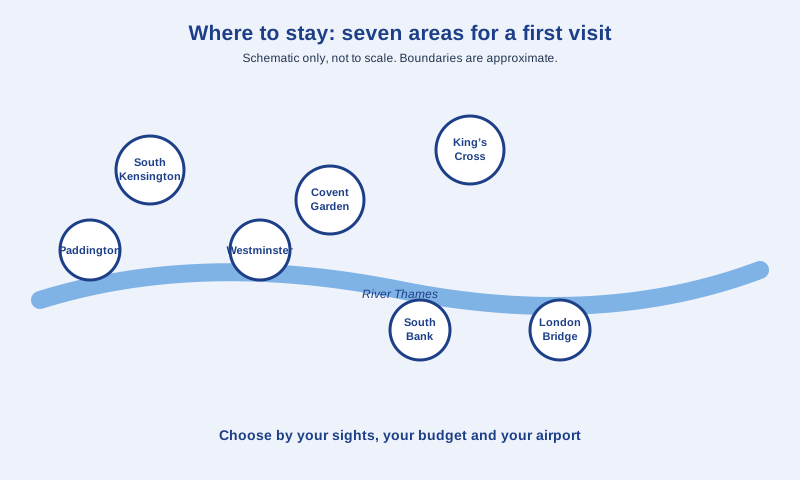
Area Comparison at a Glance
The table gives one main advantage, one main consideration and the traveller type each area suits best. It is a starting point for your own comparison, not a ranking.
| Area | Main advantage | Main consideration | Suitable traveller type |
|---|---|---|---|
| Covent Garden and the West End | Walkable to theatres, shops, restaurants and the central sights | Busy in the evenings; central accommodation can cost more | Theatre-goers, couples and short-stay sightseers |
| Westminster and Victoria | Close to government buildings, the river and main rail and coach links | Quieter in some streets; check the walk to your evening plans | Sightseers and visitors with onward rail or coach travel |
| South Bank and Waterloo | River walks, cultural venues and frequent rail links | Evenings are lively in places; check the street you choose | Visitors who like walking and the river |
| South Kensington | Museums and parks, with a calmer residential feel | Fewer central landmarks within a short walk | Families and museum-focused visitors |
| Paddington and Bayswater | Heathrow Express and Elizabeth line access, with many hotel options | Less direct for the central landmarks | Visitors using Heathrow and those wanting a quieter base |
| King’s Cross and Bloomsbury | Six Underground lines at King’s Cross, plus Eurostar and the British Museum nearby | Busy station area; check the street before you book | Visitors on rail and Eurostar journeys and those who like museums |
| London Bridge | Access to the Tower area, Borough Market and rail links from the south | Less central for West End theatre and shopping | Visitors who want the City, the Tower and the south of the river |
Covent Garden and the West End
Covent Garden is a West End neighbourhood with a historic market, a central piazza, theatres and a dense mix of shops and restaurants. Visit London describes it as a place where historic charm meets shopping, dining and entertainment, with the market and the piazza as main draws. It is the most convenient base for an evening at the theatre.
Soho sits next to Covent Garden, and the two blend into one another. Visit London describes Soho as part of the West End’s entertainment and dining scene. Treat Covent Garden and Soho as one area for planning. The main consideration is the crowd: the streets are busy in the evening, and central rooms can be expensive for their size.
Westminster and Victoria
Westminster is the centre of government and the home of the Houses of Parliament and Westminster Abbey. Victoria is a short distance to the south-west. Both areas are well connected by Underground and rail, which makes them practical for a first visit with a lot of sightseeing and onward travel.
Victoria station is one of the area’s main transport hubs. National Rail services run from it, along with Underground services on the Victoria, District and Circle lines. Victoria is also a coach terminal, which helps for some onward journeys. The main streets are busy during the day.
South Bank and Waterloo
The South Bank is the stretch of the Thames between Westminster Bridge and London Bridge, with cultural venues, food stalls and walking routes along the river. It is a popular area for walking, and it is a short distance from the central sights on the north bank.
Waterloo is the main station on the south side of the river. It is served by four Underground lines (Bakerloo, Jubilee, Northern Charing Cross branch and Waterloo & City), as well as South Western Railway services. The TfL station listing notes a large platform gap on one Bakerloo line platform, which can be difficult with pushchairs and wheelchairs, so check the route before you travel with heavy luggage.
South Kensington
South Kensington is a residential and cultural area with museums, gardens and tree-lined streets. Visit London describes the Kensington and South Kensington area as elegant neighbourhoods where royal heritage, renowned museums and leafy green spaces sit alongside stylish shopping streets. The area is well suited to families and to visitors who want several museums in a short walk.
The main consideration is distance from the central landmarks. South Kensington is a good base for museums, but for the Thames, the theatre district and the Houses of Parliament you will need to use the Underground. Check the station lines for your route on TfL before you choose.
Paddington and Bayswater
Paddington is a major rail station and one of the central stations on the Elizabeth line. Heathrow Express runs non-stop to Paddington, and the Elizabeth line also serves the station. The station is also served by Underground services, including the Circle, Hammersmith and City and Bakerloo lines. For visitors arriving from Heathrow, the station is a practical base.
Bayswater is the residential district around Paddington and Queensway. It has a range of hotels and guesthouses, and it is more residential than the West End. The main consideration is that the central landmarks are further away than from Covent Garden or Westminster.
King’s Cross and Bloomsbury
King’s Cross St Pancras is a major interchange in London. The Underground station serves six lines, and St Pancras International, next to it, runs Thameslink, Southeastern and East Midlands Railway services as well as Eurostar services to France, Belgium and the Netherlands. The station is also the London departure point for LNER and Lumo trains to Edinburgh.
Bloomsbury is the district to the south of King’s Cross. It is known for its university buildings and for the British Museum. It is a practical base for museum visits. The main consideration is that the station area itself is busy, so check the street before you book.
London Bridge
London Bridge is a station and an area on the south bank of the Thames, and it is the approach to the Tower of London and Tower Bridge on the north bank. National Rail services from London Bridge include Southern, Southeastern and Thameslink routes. Its Underground connections are the Jubilee line and the Northern line (Bank branch), according to National Rail.
Boundaries matter here. The South Bank runs along the river from Westminster Bridge towards London Bridge, so the streets near London Bridge station are the eastern end of the South Bank rather than a separate area. Staying here suits visitors who plan to spend time in the City and the Tower. It is less convenient for West End theatre.
Where the areas overlap
Covent Garden and Soho overlap. The South Bank and Waterloo overlap with the south end of the South Bank, and London Bridge sits at its east end. Westminster and Victoria are close but are separate areas for planning. Check the postcode of any accommodation against the area you want, since neighbourhood names are used loosely by hotels.
Choosing Accommodation by Budget
Central areas, such as Covent Garden and Westminster, usually offer the shortest walks to the main sights but can cost more for the same room. Areas a little further out, such as Paddington, King’s Cross or South Kensington, often offer a wider range of options. The trade-off is time: a cheaper room further out can cost more in travel time each day. This guide does not give hotel prices, and you should compare current rates on the booking site you use.
Best Areas for Families
Families often choose South Kensington for its museums and parks, or Paddington for its direct rail and airport links. Consider rooms with space for pushchairs and a short walk to a station with step-free access. Check accessibility details for each station before you book.
Best Areas for Sightseeing
If your priority is the central landmarks, Covent Garden, Westminster and the South Bank are the most practical bases. They put the theatre district, the river and the government buildings within reach of each other. For museums, South Kensington and Bloomsbury are close to several collections.
Best Areas for Airport Connections
Paddington has direct Heathrow Express and Elizabeth line access, which makes it a common base for Heathrow arrivals. Liverpool Street is the Stansted Express station, and King’s Cross and St Pancras are useful for Luton routes. Victoria suits Gatwick travellers on the Gatwick Express. Our airport transfer guide explains each route in detail.
Public Transport and Station Access
Most central areas are served by several Underground lines, so you can often reach a sight with one change. Check the Transport for London journey planner for your route on the day you travel, because engineering works and service changes are common.
- Check which lines serve your nearest station, and whether it has step-free access.
- Note that some stations have platform gaps, lifts that are out of use, or limited step-free routes.
- Choose a station you can reach from the airport route you plan to use.
Accommodation Booking Considerations
Check the cancellation terms before you book, particularly if your plans or flights may change. Read the address carefully, because neighbourhood names on booking sites do not always match the area you expect. Look at the room size, whether it has a lift, and whether breakfast or extra costs are included.
Common First-Time Visitor Mistakes
Booking a cheap room that is far from your sights
A lower room rate can be outweighed by the time and cost of a long journey each day. Compare the route from the room to your main sights.
Forgetting the station access
A station with no lift can be difficult with heavy luggage or a pushchair. Check step-free access before you decide.
UK Entry Requirements for Visitors
Whether you need a UK ETA depends on your nationality and circumstances, not on the area where you stay. Visitors who are eligible for an ETA and travel for tourism can use one for a trip like this. Travellers who are not eligible may need a visa instead. Our UK ETA requirements guide explains who needs an ETA, and the tourism guidance covers holiday visits.
If you are eligible and need an ETA, you can start your application here: Start your UK ETA application.
Frequently Asked Questions
Which area is best for a first visit to London?
There is no single best area. Covent Garden and Westminster are central, South Kensington suits museums and families, and Paddington suits Heathrow arrivals. Choose by your sights, budget and transport.
Is Covent Garden a good base?
It is a popular base for visitors who want theatre, shopping and restaurants within walking distance. Evenings are busy, and central rooms can be expensive.
Do I need an ETA to stay in London?
That depends on your nationality and circumstances, not on the area where you stay. Check the requirements guide before you book travel.
Practical Accommodation Checklist
- List your must-see sights and choose an area that puts most of them within a short journey.
- Check the nearest station, the lines it serves and whether it has step-free access.
- Compare the route from each area to your airport or rail arrival station.
- Check the postcode and the cancellation terms before you book.
- Plan for room size and luggage storage if you have a family or heavy luggage.
- Confirm your UK entry requirements, including any ETA, before you book flights.