
What a UK Bank Holiday Is
A bank holiday is a public holiday set by law. On a bank holiday, many businesses close or change their hours, and some public transport runs to a different timetable. Not every business closes, and the effect depends on the place, the service and the date.
The list of bank holidays is not the same across the UK. England and Wales share one list, Scotland has its own, and Northern Ireland has another. Some holidays fall on a fixed date and others on a fixed weekday in a month. Some move to a substitute day when they fall at a weekend. This article explains the general pattern. For the dates in any year, check the official GOV.UK tables for each nation.
Bank Holidays, School Holidays and Other Dates
Visitors often mix up four kinds of date. They work differently, so it helps to keep them apart when you plan a trip.
- Official bank holidays are set by law and apply across a whole nation. This is the main subject of this guide.
- School holidays are set by schools and local authorities. They vary by area and do not match bank holidays. A school holiday does not close shops or change transport.
- Religious observances such as Christmas and Easter have religious meaning. Christmas Day and Good Friday are bank holidays, but many other religious observances are not public holidays in the UK.
- Local events such as festivals, markets and council events happen on particular dates and in particular places. They are not bank holidays, and they can attract more visitors on the days they run.
England, Wales, Scotland and Northern Ireland
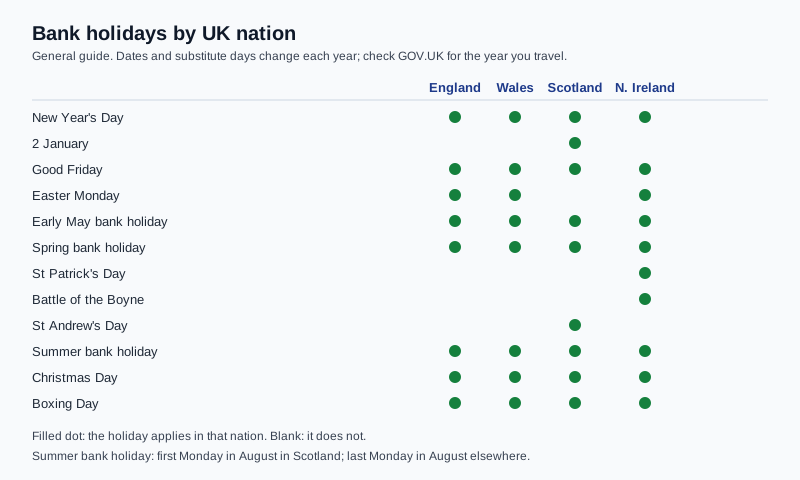
Generalisations about the UK as a whole can mislead. A holiday that applies in London may not apply in Edinburgh or Belfast. England and Wales share most of their bank holidays. Scotland has several of its own, and Northern Ireland has some of its own too. The table in the comparison section sets out which holidays apply in each nation.
New Year’s Day and 2 January
New Year’s Day is a bank holiday in England, Wales, Scotland and Northern Ireland. Scotland also has a holiday on 2 January. Under the statutory rule for Scotland, if 2 January falls on a Sunday, the holiday moves to 3 January. Plan transport and opening hours for the period around 1 and 2 January in Scotland, rather than assuming they match the rest of the UK.
Good Friday and Easter Monday
Good Friday is a bank holiday in all four nations. Easter Monday is a bank holiday in England, Wales and Northern Ireland, but not in Scotland. Easter dates change each year, so check the date for the year you travel. Services and opening hours can change over the Easter period, and some attractions have different hours. Check each one before you go.
Early May and Spring Bank Holidays
The Early May bank holiday falls on the first Monday in May in each nation. The Spring bank holiday is usually in late May. Under the statutory list, it falls on the last Monday in May in England, Wales and Northern Ireland. GOV.UK also lists a Spring bank holiday for Scotland, so check its date in the GOV.UK table before you plan around it.
Summer Bank Holiday
The Summer bank holiday is on a different date in Scotland from the rest of the UK. In Scotland it falls on the first Monday in August. In England, Wales and Northern Ireland it falls on the last Monday in August. A visit planned for early August can therefore include a bank holiday in Scotland but not in England. Check the date for your nation and your year.
Christmas Day and Boxing Day
Christmas Day and Boxing Day are bank holidays in all four nations. Both can fall on a weekend, and in that case a substitute weekday applies. The rules for the substitute days differ between nations, and they are set out in the legislation and the GOV.UK tables. Many shops, attractions and transport services run to limited timetables over the Christmas period. Check each service before you travel.
Scotland-Specific Holidays
Scotland has two holidays that the rest of the UK does not share. The first is 2 January, as described above. The second is St Andrew’s Day on 30 November. Under the statutory rule, St Andrew’s Day falls on 30 November if that is not a Saturday or Sunday. Otherwise it moves to the first Monday after that date.
Northern Ireland-Specific Holidays
Northern Ireland has two holidays that are not bank holidays in the rest of the UK. The first is St Patrick’s Day. Under the statutory rule, it falls on 17 March, or on 18 March if 17 March is a Sunday. The second is the Battle of the Boyne, also called Orangemen’s Day, which is usually on 12 July. GOV.UK lists it as a Northern Ireland holiday, and its substitute day follows the general weekend rule. Check the GOV.UK table for the year you travel.
Substituted Bank Holidays
When a bank holiday falls on a Saturday or Sunday, GOV.UK’s general rule applies. A substitute weekday becomes the bank holiday, normally the following Monday. This means a holiday that falls at a weekend can give a long weekend, and it can also change the pattern of trains and opening hours for a whole week.
Substitute days are not always the same as the rule for the weekend. Christmas and Boxing Day have their own statutory substitute rules, which vary by nation. Look at the GOV.UK table for the year you plan to travel, rather than working out the substitute yourself.
Comparing the Four Nations
The table below shows the main holidays and the nations they apply in. It does not list the dates, which change each year.
| Holiday | Relevant UK nations | Typical travel considerations |
|---|---|---|
| New Year’s Day | England, Wales, Scotland, Northern Ireland | Services and opening hours can change; check before you travel |
| 2 January | Scotland only | Scotland only; the holiday moves to 3 January if 2 January is a Sunday |
| Good Friday | England, Wales, Scotland, Northern Ireland | Shops and attractions may have different hours; check each one |
| Easter Monday | England, Wales, Northern Ireland (not Scotland) | Not a bank holiday in Scotland; check opening hours in Scotland separately |
| Early May bank holiday | England, Wales, Scotland, Northern Ireland | First Monday in May; public transport can change |
| Spring bank holiday | England, Wales, Scotland, Northern Ireland | Usually late May; check the date for the year you travel |
| St Patrick’s Day | Northern Ireland only | 17 March, or 18 March if 17 March is a Sunday |
| Battle of the Boyne (Orangemen’s Day) | Northern Ireland only | Usually 12 July; check the substitute day for the year |
| St Andrew’s Day | Scotland only | 30 November, or the following Monday if it falls on a weekend |
| Summer bank holiday | England, Wales, Scotland, Northern Ireland | First Monday in August in Scotland; last Monday in August elsewhere |
| Christmas Day | England, Wales, Scotland, Northern Ireland | Substitute rules differ by nation; many services change |
| Boxing Day | England, Wales, Scotland, Northern Ireland | Substitute rules differ by nation; many services change |
Shops, Museums and Attractions
Opening hours on a bank holiday vary widely. Some shops close, some open for shorter hours, and some keep their normal hours. Museums, galleries and visitor attractions set their own arrangements, and these can change for a particular day. Check the attraction’s own website or booking page before you visit on a bank holiday.
This guide does not guarantee opening hours, the availability of any attraction, or the cost of tickets. These depend on the business and the date.
Trains, Public Transport and Airports
Trains and buses can run to a different timetable on a bank holiday, and services can be reduced. Check the timetable for your route and the operator’s service updates before you travel.
Airports can also be busier, and disruption can happen at any time. Allow extra time for check-in and for travel to the airport on a bank holiday. For ticket rules on trains, see the UK train tickets guide, which explains Advance, Off-Peak and Anytime tickets.
Restaurants and Accommodation
Restaurants and cafés may change their hours or book up on a bank holiday weekend. Hotels and holiday accommodation can also be in higher demand around the holidays, and popular cities can fill quickly. This guide does not give accommodation prices, which depend on the property and the dates. Book early if your trip falls on a holiday.
Planning Around Large Events
Large events can draw crowds to a particular area, and a bank holiday can add to the pressure on transport and accommodation. Check the event organiser’s own information for dates, travel and entry arrangements. Events and their dates change, so check them close to your visit.
Common Tourist Mistakes
- Assuming all four UK nations have the same bank holidays.
- Treating a school holiday as if it closes shops or changes trains.
- Planning a fixed date from last year, when the holiday moves or a substitute day applies.
- Assuming Easter Monday is a holiday in Scotland.
- Booking a train or attraction without checking whether it runs or opens on the holiday.
- Expecting accommodation to cost the same on a holiday weekend as on other weekends.
Holiday Travel Checklist
- Check the GOV.UK bank holiday table for each nation you plan to visit, for the year you travel.
- Note any substitute days that fall during your trip.
- Check the opening hours and booking rules for each attraction you plan to visit on a holiday.
- Check the timetable and service updates for trains and buses on the holiday.
- Book accommodation and popular tickets early if your trip falls on a holiday.
- Check the dates for any large event you plan to attend.
Frequently Asked Questions
Are bank holidays the same across the UK?
No. England and Wales share most of their bank holidays, Scotland has several of its own, and Northern Ireland has some of its own. The comparison table shows which holidays apply in each nation.
What is a substitute bank holiday?
When a bank holiday falls on a Saturday or Sunday, a weekday becomes the holiday instead. GOV.UK says this is normally the following Monday. Christmas and Boxing Day have their own substitute rules, which differ by nation.
Is a school holiday the same as a bank holiday?
No. School holidays are set by schools and local authorities, and they vary by area. They do not close shops or change transport in the way a bank holiday can.
Do I need to check the dates every year?
Yes. Holidays that fall on a fixed date, and substitute days, change from year to year. Check the GOV.UK table for each nation for the year you travel.